 Jul 11 2026
 Jul 04 2026
 Jun 27 2026
 Jun 20 2026
 Jun 13 2026
 Jun 06 2026
 May 30 2026
 May 23 2026
 May 16 2026
 May 09 2026
 May 02 2026
 Apr 25 2026
 Apr 18 2026
 Apr 11 2026
 Apr 04 2026
 Mar 28 2026
 Mar 21 2026
 Mar 14 2026
 Mar 07 2026
 Feb 28 2026
 Feb 21 2026
 Feb 14 2026
 Feb 07 2026
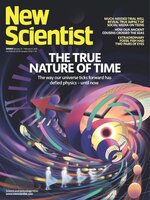 Jan 31 2026
New Scientist covers the latest developments in science and technology that will impact your world. New Scientist employs and commissions the best writers in their fields from all over the world. Our editorial team provide cutting-edge news, award-winning features and reports, written in concise and clear language that puts discoveries and advances in the context of everyday life today and in the future.
Life 0.1 • Synthetic biology hasn’t cracked artificial life – but it is getting closer
New Scientist
Solving gravity’s greatest mystery • The question of how gravity interacts with the quantum world has long perplexed physicists, but wobbles in time could help us find an answer, finds Leah Crane
Ovaries may spark inflammation after menopause
Childbirth for some primates is harder than for humans
Why did our brains get bigger? • Our brains are large compared with other animals, so it is tempting to assume there was an evolutionary advantage to them – but that may not be true, discovers Michael Marshall
June heatwave may have killed 20,000 people in Europe
Synthetic cell breakthrough • A protoype cell partly capable of replicating itself is arguably the greatest feat of bioengineering yet, reports Michael Le Page
Collapse of key ocean current may already be locked in
AI firms turn to philosophy • Philosophers are joining AI companies to help them understand the nature of consciousness and improve their models, finds Matthew Sparkes
Audacious mission to rescue NASA’s falling telescope
Traces of Earth’s primordial magma ocean spotted in lava
Mapping the stars • The most detailed survey yet of our solar system and beyond has begun
Geoengineering may cause air-travel health risks
‘Hobbit’ hominins scavenged meat left over by Komodo dragons
Orangutan infants go on playdates
Fibre that may stop weight gain approved for use
Remodelling particle physics • The weirdness of neutrinos could lead us to rethink how particles are defined within the standard model, discovers Karmela Padavic-Callaghan
Number sense is present from birth • The neural foundations of maths have been seen in brain recordings from newborns
Useful quantum computer targeted by US government
When extinction is a good thing • We have developed genetic technologies that could wipe out harmful pests like mosquitoes or flesh-eating screwworms. We should start to use them, says Michael Le Page
Playing quantum games • The world of quantum video games is vast – and they could help us better understand quantum physics, finds Karmela Padavic-Callaghan
Melting ice
Our favourite sci-fi TV so far… • The first half of 2026 has seen bright threads in sci-fi series including Fallout and Paradise. But for pure gold, says TV columnist Bethan Ackerley, try Star City
… and our top documentaries • From AI with Hannah Fry to David Attenborough’s early days and the Artemis mission, these are the five must-watch science shows of the year to date
New Scientist recommends
The science of fatherhood • Dads are often overlooked when it comes to parenting science. A fascinating new book is out to change that, says Olivia Goldhill
Your letters
Your brain check-up • In our efforts to keep our brains healthy, how do we know what is working? Helen Thomson looks into what the latest tests can tell us
“If we explore with fewer guard rails, we could speed up discovery” • Seeking out the simplest, most elegant explanations has served scientists well for centuries, but cognitive scientist Marina Dubova tells Thomas Lewton there is a better way to help us uncover reality
Unusual conduct • Metals that conduct electricity in a bizarre way are forcing...